The Questions we asked our 4 panelists:
1. Which of the following ideas do you prefer? (we then told them the 3 ideas)
2. Which one do you think will create the most tension?
3. Would you prefer it to be in Black and White or in colour?
4. Do you think it will be more effective if the scene had a powerful soundtrack or silence?
5. Do you think it will be more effective using Diegetic or Non-diegetic sounds?
The answers that were given to these questions are in the following clip.
Tuesday, 18 December 2012

Friday, 14 December 2012
Zodiac
- Conventions
enigmas, tension and shock
- Camera
- Editing
- Sound
- Mise-en-scene
Brick
- Conventions
enigmas and flashbacks
- Camera
close ups
- Editing
slow cuts, no dialogue, dissolve, flashbacks
- Sound
mysterious, non-diegetic
- Mise-en-scene
dead body, depressed body language
Memento
- Conventions
enigmas, cliffhangers
- Camera
close ups
- Editing
going backwards, black and white effect
- Sound
diegetic and non-digetic, with dialogue
- Mise-en-scene
blood, death and guns
Tuesday, 11 December 2012
Friday, 7 December 2012
Preliminary Task
Filmed By Jade Guest & Grace Nwobi
Starring Andrew Maloney & Leon Lindsay-Ayres
Our Preliminary Task was to film a short clip showing all the different camera angles we learnt in class, and also to get used to editing videos to gain a better understanding. Therefore, we made up a storyline to help the clip flow. Enjoy.
A Thriller of My Choice
A Thriller that I have decided to analyse in my own time is Inside Man. This is a film starring Clive Owen, Denzel Washington and Jodie Foster and many others. The story line is that Clive Owen and his team have come up with the perfect way to carry out a bank robbery. Denzel Washington acts as a police officer and has been assigned to the case. The way the film operates is very good, as the opening scene is showing the end, and throughout the film it is showing how they got to that stage, so it is playing it back to the audience. Throughout the film, it keeps skipping from present tense to past tense, which is very effective in this case. The suspense and shock is built up throughout the film which keeps the audience on the edge of their seats. On top of this, there are a few action/fighting scenes which also work well on keeping the audience focused. As well as excellent action and thrilling scenes, the actual story line is very good. Clive Owen claims he is going to walk out the front door of the bank with the money right at the start of the film, which creates suspense throughout the whole film. This is because the audience want to know if he is actually going to do what he says. This movie has every conversion of a Thriller, involving everything from Red Herrings and Cliff hangers, to Sub-genres and Complex characters. There is also a major plot twist towards the end of the film which also helps to create that edge-of-seat feeling.
Suspense and Shock
Alfred Hitchock was known as the master of suspense, as he became so used to creating Thrillers. A few quotes of Alfred Hitchcock are:
- "If it's a good movie, the sound could go off and the audience will still have a perfectly clear idea of what was going on"
- "Always make the audience suffer as much as possible"
- "I am a typed director. If i made Cinderella, the audience would immediately be looking for a body in the coach"
Most of Hitchcock's filmed started off with an opening scene of someone getting murdered, and the film will just escalate from there. He will use a lot of the Thriller conventions as i mentioned before. Things like:
- Red Herrings
- Cliff Hangers
- Suspense
- Protagonist and Antagonist
- Cat-and-mouse affect (Pursuit/Chase)
- Complex Characters
- Maguffin
- Sub-genres
- Enigmas
- Shock
- Paranoia
- Plot twist
- Deadlines
If a Thriller have all of the above, it is definitely increasing its chances of being a success.
The main difference between Suspense and Shock is that with Suspense the audience are aware of something that the characters are not. Shock is quite self-explanatory, its when both the audience and the characters are shocked and caught off-guard.
Main examples of Shock and Tension that spring to mind are films such as Children of Men, Sabotage and Rope. These are all trailers of the films we have been studying in class. All of these films contain shock and suspense.
Children of Men
Sabotage
Rope
The main difference between Suspense and Shock is that with Suspense the audience are aware of something that the characters are not. Shock is quite self-explanatory, its when both the audience and the characters are shocked and caught off-guard.
Main examples of Shock and Tension that spring to mind are films such as Children of Men, Sabotage and Rope. These are all trailers of the films we have been studying in class. All of these films contain shock and suspense.
Children of Men
That was the Children of Men trailer, showing shock and suspense. They are used very effectively in this film, as it keeps the audience on the edge of their seat. The main example of Shock in this film are all the explosions going off, gun shots firing etc.
Sabotage
In Sabotage, the bus scene is an excellent example of Suspense. This is because he is carrying a bomb on the bus, but is unaware it is a bomb. However, he audience DO know. It is set to go off at 1:45, and every now and then the camera will focus on the clock to remind the audience of the time and to keep the tension and suspense built, along with the non-diegetic music playing.
Rope
Rope is a very good example of what Alfred Hitchcock was like as a Director. He created a typical "Hitchcock" Thriller in this case. It starts off with a murder, which sets up the rest of the film and gives the audience an automatic idea of what the film is going to be about and what the plot is.
Road Runner
Chuck Jones was an animation director, and worked at Warner Brothers for decades making short movies starring popular animated characters such as Bugs Bunny, Daffy Duck etc.
The roadrunner is another character who is a success in the Warner Brothers industry. It is famous for not using dialogue in its short, humorous clips. It basically includes Wile E.Coyote chasing a road runner purely because it annoys it. When they are both running it does build tension, as the audience are wondering if the Road Runner is going to be caught or not. The only famous words said on that program are "MEEP MEEP!" by the Road Runner. Creating a film with hardly any dialogue is something very hard to do, although it is a bit easier in animated programs/films, simply because anything that happens doesn't have to make perfect sense, and doesn't have to be actually possible. For example when the Coyote falls off the edge of the cliff, he always survives and returns to carry on pestering the Road Runner.
However, nevertheless Road Runner is still a good example of a Thriller, because it follows the rules of a basic thriller. The rules of The Road Runner are:
However, nevertheless Road Runner is still a good example of a Thriller, because it follows the rules of a basic thriller. The rules of The Road Runner are:
- The Road Runner cannot harm or upset the Coyote except by saying "MEEP MEEP!"
- The Coyote can stop at any time, if he wasn't a fanatic
- As i already mentioned, there is no dialogue except from "MEEP MEEP!"
- The obvious rule is that the Road Runner must stay on the road, otherwise it would confuse the audience as he wouldn't be a road runner if he doesn't run on the roads.
- All materials must be obtained by Acme Corporation. So for example the tools, materials, weapons or even mechanical conveniences.
- Whenever possible, gravity seems to be the Coyote's biggest enemy, for example there are always objects falling on him and flattening him, or he falls of the edge of the cliffs.
- The Coyote never seems to capture the Road Runner, and always seems more humiliated than hurt by objects falling on him or falling off the cliff.
Thursday, 6 December 2012
No Country For Old Men
No Country for Old Men is very successful film released in 2007, directed by Joel and Ethan Coen. The film is basically about a man (Josh Brolin) who has come across a small fortune which does not belong to him. It is based on the "cat and mouse" drama. Josh basically has to escape the man chasing him (Javier Bardem), as well as the local Sheriff (Tommy Lee Jones). The film is based in Texas, and quite a large section of it was filmed in a desert landscape. The film managed to rake in $1,226,333 over the opening week. which converts to £761,182.
Alfred Hitchcock
Alfred Hitchcock is an English film producer and director, and a very successful one. He carried out very effective film techniques in the Thriller genre, that set an example to other film directors. His techniques did influence and inspire many other film directors, as they were so successful.
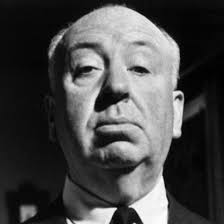
Alfred Hitchcock also done his fair share of silent films, and even earlier than this; talkies. Hitchcock then realised his potential, and moved to Hollywood to join the most successful film directors in the world. He pioneered the use of a camera made to move in a way that mimics a person's gaze, forcing viewers to engage in a form of "voyeurism". He framed shots to highlight anxiety and fear, and used innovative film editing. He filmed over 50 featured films in a career lasting 6 decades. He is known by many people as the greatest British film director, and had feedback such as "got emotion from the audience like no other director".
Tuesday, 4 December 2012
Vertigo
Alfred Hitchcock's classic starring Jimmy Stewart was a major success in the film industry. It is a typical example of what a thriller should be like. He took everything into consideration when he created a mysterious, gloomy, weary atmosphere throughout most of the film. Also, things like the scenery, what the characters are wearing, the dialogue, body language, lighting, camera angles etc. all sync together to create exactly what the director wants to create. Alfred Hitchcock tended to use graphic matches a lot to create that kind of James Bond impression. He has done this purposely, as he knows people are very familiar with the James Bond feeling of a Thriller, so he has done this so people get the impression of a Thriller with his film too, which was done successfully.
Thriller Conventions
The basic plot of every Thriller is basically Justice vs Injustice, with a slightly blurred line of good and bad, enigmas, red-herrings, plot twists, cliff hangers, shock, Maguffin, . It also contains sub-genres, which is mystery, crime, psychological and political. Certain moods that are mostly created in Thrillers are the sense of murder, menaces, mystery and mostly frequently used; paranoia.
If there was a sum up of a standard Thriller then it would that there are characters taking part in a dangerous mission, risking their life. Escape seems impossible. It creates an Edge-of-your-seat feeling, as you are always anxious on what is going to happen next. Tension really helps to build this kind of feeling, as well as climax, suspense, chases, pursuits and deadlines. Also, there are complex characters, some are troubled, multi-faceted, and morally complex. And you may have also noticed that the Society is always dark and corrupt. This is done on purpose to create that Low-key lighting to create a mysterious, unclear feeling. The fact that you can't actually see some of the characters faces fully, really makes the audience weary and uncomfortable when the character is on screen.
If there was a sum up of a standard Thriller then it would that there are characters taking part in a dangerous mission, risking their life. Escape seems impossible. It creates an Edge-of-your-seat feeling, as you are always anxious on what is going to happen next. Tension really helps to build this kind of feeling, as well as climax, suspense, chases, pursuits and deadlines. Also, there are complex characters, some are troubled, multi-faceted, and morally complex. And you may have also noticed that the Society is always dark and corrupt. This is done on purpose to create that Low-key lighting to create a mysterious, unclear feeling. The fact that you can't actually see some of the characters faces fully, really makes the audience weary and uncomfortable when the character is on screen.
Friday, 30 November 2012
Cinematography
Editing a scene is very important if you want to create the right mood and right effect. The camera should capture a Master Shot, which gets both characters in the frame, and a Mid-shot which will only focus on one of the characters at a time. The Mid-shots will be used throughout most of a conversation. Things that will improve how good your scene looks are things like parallel music and contrapuntal music.
Monday, 26 November 2012
Recipe for James Bond Thrillers
Like his famous shaken-but-not-stirred martini's, all you need is:
- One part dashing, sexy, and heroic secret agent
- One part eccentric villain of equal strength
- Two dashes of gorgeous women
- Ice cubes of exotic locations and plot devices
- A glass filled to the brim with eye-popping, stunt-driven action from the top shelf of absurdity
James Bond has expanded and developed an incredible amount. For example times have changed since Sean Connery was playing the 007 secret agent. The audience can see this mainly by the effects and camera work, however everything to do with the film in general is completely different. Feel free to look at these two clips to see the difference for yourself.
Friday, 23 November 2012
Camera Skills
There are many different camera skills that directors use to create the right mood or effect in their film. Everything that the audience can see on screen has been purposely done. For example, the background, the characters appearance, body language, the angle of the shot, the speed of the cut, the lighting, the music playing etc.
The background of every scene would have been thought very carefully about, because it is vital to create the right mood. For example if it was a romantic scene, as a director you might carry out the scene on a beach. Scenery that wouldn't link well with this kind of scene would be a cave or a dark alley.
The characters appearance gives the audience quite a strong impression of what they're like. This camera skill is a good way to single out the "god guy" from the "bad guy" in a film. Also linked to this, is body language. Face-to-face communication is 60% body language, 30% the tone of your voice, and 10% of the actual words you use. This means that 90% of your communication, isn't even coming out of your mouth. This highlights how important an actors body language is.
The angle of the shot is probably the most important thing directors have to analyze. For example, where the camera needs to be in different situations. They also have to be sure they do not break the 180 degree rule. The 180 degree rule is best explained in this picture:

Also, the speed of the cut is important considering the mood it is creating and what Genre the film is. Action films will have fast short snappy cuts, to enhance how anxious and paranoid the character might be. Romantic films will have long slow cuts to show there is no rush, and that it's a calm atmosphere.
The lighting is also important in each scene as it can help us figure out what type of person a certain character is. For example, if someone is sitting in a dark room with a spotlight next to them so you can just see the silhouette of the body, then it shows that they don't want to be seen, they're mysterious.
Lastly, Non-Diegetic sounds can help create an impression of a certain character just by the music being played when they appear on screen.
Friday, 9 November 2012
Media Task
This is a short clip that shows different camera angles used. Camera angles shown are Tilt, Long Shot, Tracking Shot, Birds Eye View, Handheld etc. The location of this short clip is in our school, we worked on it for about 20 minutes, getting the camera in the right places and sorting out the lighting for each scene. The idea of it was that Grace and Leon was going for a walk, not noticing Jimmy standing there watching them.
Enjoy.
Friday, 26 October 2012
Mise-En-Scene
Mise-En-Scene basically means everything that appears on the screen. Things like the casting of the characters, their clothing, the details of the environment, props, decor etc.
It is a french term that means "placing on stage". The frame and camerawork also constitute the Mise-En-Scene of a movie.
Setting - location and environment where action takes place, colours used to light the action, exterior/interior, time of day.
Wardrobe - importance of costume for certain characters, make-up, hair.
Props - what is visible in the frame, where are they? (in or out of focus)
Acting - positioning of actors, interaction with each other, casting.
Placement - how all of these things are positioned within the composition of a shot.
Effect - on the audience. For example, the mood, tension, atmosphere, emotion, implicit/explicit meaning.
My Own Analysis of Mise-En-Scene (Notes)
These are the notes I made in class as the whole class watched the opening 20 minutes of a film. it is showing how I analyzed the clip and the sort of stuff I monitored throughout the clip.
- the music fits in with the images on screen
- jump cut from scene to scene
- mysterious music helps build tension throughout the scenes, misty background to add to the mysterious effect
- shouting aggressively down the phone
- silhouettes in the background get our attention
- sound effects of the flick knife make the movement of the knife more dramatic
- the noises that occur when he is being stabbed also add to the drama
- there was a moment of eye contact, where the characters were looking at each others reactions to what just happened
- sound of the bells introduces the funeral
- sound of seagulls and fairground rides shows they're at the seaside, and the beach in the background
- his body language changes; paranoid
- his reaction was not expected, and he flips the situation
- the music sets every scene
- steady cam shot and handheld shot (point of view)

Genre
The genre of the film basically means what kind of audience will be interested in watching the film and what it is going to be about. For example if there is a film about love, the genre will be Romance. There are many different film genre's such as thriller, horror, action etc.
In each genre, the camera techniques used are very different. Romantic films will consist of very long shots to endure in the moment. However, in action/horror films there will be a lot of quick/snappy shots to highlight the speed of the film and how the audience should be feeling. Also, a lot of the time in action films the camera will be handheld to show the point of view of the character.
The example i will be showing you is a short clip from Bourne Ultimatum. Pay attention to the short quick shots and how the camera is handheld at times.
Narrative
This is a short music video showing you an example of narrative videos. Narrative basically means a chain of events that are linked together and tell a story.
A story will have a beginning, a middle and an end. On film, these can unfold in a different order. A story is basically a series of events recorded in their chronological order. This is known as a linear narrative.
A plot is a series of events deliberately arranged to reveal how dramatic, thematic and emotional significant they are. Enjoy!
I will be using this film technique in my media project as i think it is very effective.
The Brief
I have been asked to produce the titles and opening sequence of a new fiction film in the thriller genre. The sequence has to last a maximum of 2 minutes and i am allowed to work in a group of 2 - 4 students. As acting is not assessed i am free to use actors that are not members of my actual group. The film is worth 60% of my coursework grade so it is vital we do well. However, this blog is worth 40% of the remaining grade so it is also important this blog is updated on a regular basis.
Welcome.
Hello, Bonjour, Salut!
Welcome to my AS Media Thriller blog.
I am going to be publishing my Media Coursework on a regular basis so you are more than welcome to watch my progress for yourself. Enjoy.
Subscribe to:
Posts (Atom)